
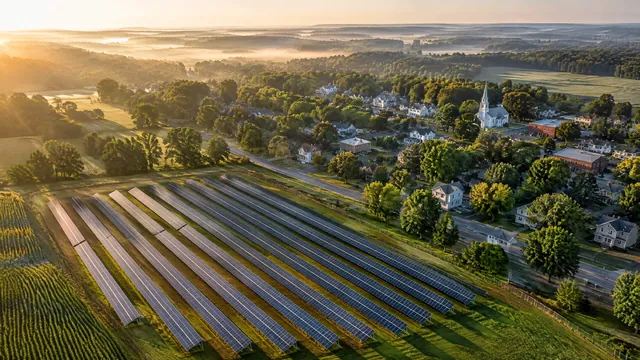
Education
Community Solar 101: How It Works and Who Can Join
A plain-English guide to subscribing to a local solar farm, with no panels, no roof work, and the same utility you already use.
· 5 min read
Get SNAP, Medicaid, or energy assistance? Income-qualified households may save more, and we can help you apply for Lifeline. See if you qualify

Community solar · Nothing to install.
Subscribe to a share of a solar farm near you and get credits on the electric bill you already pay. Homeowners, renters, and businesses welcome.
Example only, not a quote or guarantee. Savings depend on your state, usage, and project.
2026 figures. Savings is an estimate for a full year across all enrollments; individual savings vary.
How it works
Community solar lets you get credit for power from a solar farm near you, without putting anything on your home.
A solar project in your utility’s area sends its power into the same grid that already serves your home.
Your utility turns your share of that production into a dollar credit on your account. State program rules set the credit value.
Your subscription costs less than the credits you receive. The difference is your savings.
Your utility. You keep the electric company you have now.
Your power. The same wires deliver your electricity, day and night, sunny or cloudy.
Your home. Nothing is installed. No panels, no roof work, no equipment.
Credits on your account. Community solar credits show up on your electric account each month.
One bill or two. Depending on your utility and project, you get one bill that shows your credit and subscription, or your utility bill plus a separate subscription bill.
No upfront cost to join.
Nothing to buy and nothing to install. You pay a monthly subscription, and it costs less than the credits you receive.
Who we serve
Pick the path that fits. Each one opens the right questions in our short eligibility form.
Subscribe to a share of a local solar farm and get credits on the electric bill you already pay.
If you get SNAP, Medicaid, energy assistance, or similar help, you may qualify for reserved spots. We can also help you apply for Lifeline.
Small and medium commercial accounts can subscribe too. Tell us about your accounts and we’ll check what fits.
How your savings work
Your savings depend on your state, your utility, and the project you join. Before you sign anything, we walk you through how savings work for an available project.
Your share of the solar farm’s production becomes a dollar credit on your electric bill.
You pay for your subscription at a price below the value of those credits.
Credits cover part of your bill, so the discount applies to the credits, not your whole bill.
Savings estimate
Pick your state and move the slider to your average monthly bill.
Estimate only, not a quote. It assumes solar credits cover about 75% of your bill and applies our example discount for your state to those credits. Your actual credits and discount depend on your usage and the project you join.
Your estimate
Pick your state to see an example.
Each state sets its own program rules, so the example changes by state.
Where we enroll
Pick your state to see its program, the utilities we serve, and how billing works.
Xcel Energy
View MinnesotaBGE · Pepco · Delmarva Power · Potomac Edison
View MarylandDelmarva Power
View DelawareComEd · Ameren Illinois
View IllinoisCentral Maine Power · Versant Power
View MaineRhode Island Energy
View Rhode IslandCentral Hudson · Con Edison · National Grid · NYSEG · Orange & Rockland · RG&E
View New YorkWe’ll let you know when we enroll in your area.
Join the waitlistGoogle reviews
Copied word for word from our Google reviews.
“Caleb and Brooks were incredibly helpful. They really seemed to know what they were talking about and did their best under difficult circumstances to get us enrolled. Great guys”
Steven Nesheim
Google review
“Great experience! Caleb was so kind, thorough, and knowledgeable! He was so easy and nice to talk to! Would recommend!”
Kristi Johnson
Google review
“These gentlemen came to our town of >1000 people and were very respectful. They explained the program way better than previous knockers. I would definitely recommend their expertise”
Jackson
Google review
For community solar developers
About 50% of our enrollments are income-qualified households. Field teams in seven states, Category 4 documentation, and reporting that fits your systems.
Partner with CSR2026 figures. Savings is an estimate for a full year across all enrollments; individual savings vary.
Homeowner guides
Education
A plain-English guide to subscribing to a local solar farm, with no panels, no roof work, and the same utility you already use.
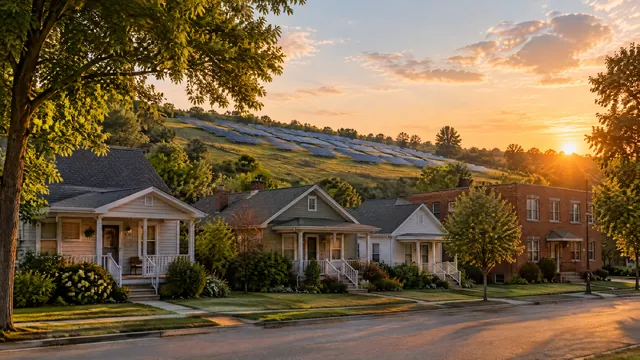
Income-qualified & Lifeline
Many state laws set aside space in community solar projects for income-qualified households, and some require bigger discounts. Here's how it works, how to qualify, and how we can help you apply for Lifeline at the same time.
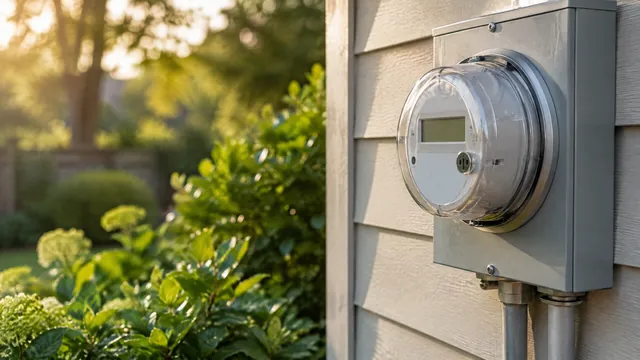
Education
What your solar credit is, one bill vs. two, and why the amount changes with the seasons.
FAQ
Still unsure? Talk to a real person. We’ll walk you through it.
Community solar lets you subscribe to a share of a local solar farm. Your share of the electricity it produces becomes a credit on your electric bill. You pay less for the subscription than the credits are worth, and the difference is your savings. Nothing is installed at your home.
No. Renters and homeowners can both join. You need an electric account in your name with a participating utility in one of the states we serve.
No. There are no panels, no roof work, and no equipment. The solar farm makes the electricity, and your utility keeps delivering power to your home the same way it does today.
Your utility turns your share of the farm’s production into a dollar credit on your account. Depending on your utility and project, you get one bill that shows the credit and subscription together, or two bills: your utility bill with the credit, plus a separate subscription bill.
Credits usually start within one to two billing cycles after your subscription is active. Timing depends on your utility and your project.
Yes. Community solar programs are created by state law and overseen by state regulators. A legitimate representative tells you who they work for and shows ID. CSR is an independent enrollment company, not your utility.
You may. Many states reserve part of each project for income-qualified households, and some limit what those subscribers can be charged. Which programs count depends on your state and project. There is nothing to upload. We confirm on the call.
Lifeline is a federal program, run by the FCC and administered by USAC, that lowers the monthly cost of phone or internet service for eligible households. Only one benefit is allowed per household. We can help you apply on the same call as community solar.
Yes, in programs that include businesses. Rules for commercial accounts vary by state and project. Choose Business on our eligibility form, and we’ll confirm which of your accounts can join.
It takes about five minutes. Nothing to upload, and a real person calls you.